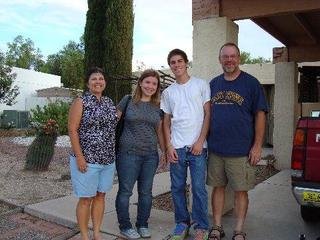
Seth is preaching this Sunday while I will be away on Snowblast 08. Photos from last year's event are here (password is Catalina).
Anyway, Seth has gave me his Scriptures and good article to supplement the message, and I put them in the worship bulletin.
I promise to blog more next week!
Thursday, January 17, 2008


Thursday, January 10, 2008
Paint by the Spirit Returns in February
One of the studies that received the most favorable responses that I've done is Paint by the Spirit. In this study, we considered four well-known artists (Van Gogh, Picasso, Monet, Rembrandt) and the spiritual significance of their works. We will do a second series of four artists beginning February 17.
This Sunday is also our Bring a Friend Sunday at Catalina. You can use our topic as a conversation starter to invite friends to view great art and hear how the Scriptures relate.
I have not chosen artists yet, but am considering Degas, Michelangelo, Cezanne, Reubens, Renoir, Jackson Pollock, and Cassatt.
This Sunday is also our Bring a Friend Sunday at Catalina. You can use our topic as a conversation starter to invite friends to view great art and hear how the Scriptures relate.
I have not chosen artists yet, but am considering Degas, Michelangelo, Cezanne, Reubens, Renoir, Jackson Pollock, and Cassatt.
I was mad; I was sad; I was frustrated.
If you can stand it, view a slideshow of game photos here.
Yes, the Arizona Wildcats lost last night to ASU. ASU. I can't believe it and I hope you can't either. Yes, Jerryd Bayless was still out of the lineup. Yes, Brett Brielmeier re-injured his shoulder. But ASU? If you can't get up for this game, what do you expect post-season? I wonder why Kirk Walters didn't play. Does Coach O have something against him? I don't know. I'll never give up on the Wildcats, but last night's game was a severe disappointment.
At least the Suns won.
Yes, the Arizona Wildcats lost last night to ASU. ASU. I can't believe it and I hope you can't either. Yes, Jerryd Bayless was still out of the lineup. Yes, Brett Brielmeier re-injured his shoulder. But ASU? If you can't get up for this game, what do you expect post-season? I wonder why Kirk Walters didn't play. Does Coach O have something against him? I don't know. I'll never give up on the Wildcats, but last night's game was a severe disappointment.
At least the Suns won.
The Baptism of Christ
This is the second Sunday in the season of Epiphany, and the theme in the lectionary for January 13 is the Baptism of Christ. The theme of Epiphany is presenting Jesus as the Christ, so it is understandable that his baptism would be part of this consideration. At the baptism of Jesus, the Holy Spirit descended on him like a dove and the voice of God was heard proclaiming "This is my beloved Son, in whom I am well pleased." Our worship bulletin for this Sunday is here.
But why was Jesus baptized? People came to John to be baptized "confessing their sins" (Matthew 3) and for "forgiveness of sins" (Mark 1). If Jesus had no sin, why was he baptized? There are several theories as to why Jesus was baptized.
Some scholars believed that it was at the baptism that Jesus became the Christ. If this is so, there would have been no need for the miraculous birth. If this were so, John would not have recognized Jesus for who he was BEFORE the baptism.
Some hold that John's baptism was part of the initiation rite for the ascetic group living in the area known as the Essenes. It is true that John was an ascetic, hermit-type character. But Jesus never was. In fact, the Pharisees and John's disciples questioned him about his lack of asceticism (Matthew 9.9-17).
Another view is that Jesus was baptized to connect his life and ministry with that of John the Baptist. This works to a certain extent. Notice in Matthew 3.2 the message of John: “Repent, for the kingdom of heaven has come near.” Then notice in Matthew 4.17 the message of Jesus: “Repent, for the kingdom of heaven has come near.” There is a significance to the connection between Jesus and John. The Scriptures are clear that John was the forerunner for Jesus; one who goes before and prepares the way. In our language, John was the advance man for Jesus.
I am most convinced by the idea that Jesus was baptized to identify with us. Jesus was baptized not because of HIS sins, but because of OURS. When John objected to baptizing him, Jesus said, “Let it be so now; for it is proper for us in this way to fulfill all righteousness.” Jesus came to John to be baptized because he was identifying with us fully; with our human condition and need completely. As Jesus identified with us at his baptism, so we are identified with him. We are also now God’s beloved child in whom God is well-pleased (2 Corinthians 5.21, John 1.12). So, it can be said that the baptism of Christ is an extension of the incarnation. Jesus continued to show that he was truly “Emmanuel, God with us.” And as Jesus’ baptism identified him with us and our condition, so our baptism identifies us with Jesus and his condition (Romans 6.3,4).
I will elaborate on this Sunday!
But why was Jesus baptized? People came to John to be baptized "confessing their sins" (Matthew 3) and for "forgiveness of sins" (Mark 1). If Jesus had no sin, why was he baptized? There are several theories as to why Jesus was baptized.
Some scholars believed that it was at the baptism that Jesus became the Christ. If this is so, there would have been no need for the miraculous birth. If this were so, John would not have recognized Jesus for who he was BEFORE the baptism.
Some hold that John's baptism was part of the initiation rite for the ascetic group living in the area known as the Essenes. It is true that John was an ascetic, hermit-type character. But Jesus never was. In fact, the Pharisees and John's disciples questioned him about his lack of asceticism (Matthew 9.9-17).
Another view is that Jesus was baptized to connect his life and ministry with that of John the Baptist. This works to a certain extent. Notice in Matthew 3.2 the message of John: “Repent, for the kingdom of heaven has come near.” Then notice in Matthew 4.17 the message of Jesus: “Repent, for the kingdom of heaven has come near.” There is a significance to the connection between Jesus and John. The Scriptures are clear that John was the forerunner for Jesus; one who goes before and prepares the way. In our language, John was the advance man for Jesus.
I am most convinced by the idea that Jesus was baptized to identify with us. Jesus was baptized not because of HIS sins, but because of OURS. When John objected to baptizing him, Jesus said, “Let it be so now; for it is proper for us in this way to fulfill all righteousness.” Jesus came to John to be baptized because he was identifying with us fully; with our human condition and need completely. As Jesus identified with us at his baptism, so we are identified with him. We are also now God’s beloved child in whom God is well-pleased (2 Corinthians 5.21, John 1.12). So, it can be said that the baptism of Christ is an extension of the incarnation. Jesus continued to show that he was truly “Emmanuel, God with us.” And as Jesus’ baptism identified him with us and our condition, so our baptism identifies us with Jesus and his condition (Romans 6.3,4).
I will elaborate on this Sunday!
Thursday, January 03, 2008
Epiphany This Sunday, January 6
The worship bulletin for this Sunday is here. There are a lot of cool traditions centered around Epiphany. You can read about them here. There is more info here; especially read about the traditions associated with Epiphany. I think the ideas of "chalking the door" and the Epiphany cake are especially cool.
Thursday, December 13, 2007
Sunday December 23
The final theme for Advent is LOVE. Here are the Scriptures:
John1.1-18
Philppians 2.5-11
And here is the worship bulletin.
John1.1-18
Philppians 2.5-11
And here is the worship bulletin.
Third Sunday in Advent
The worship bulletin for this Sunday is here. The theme for this week is JOY. That's good, right? We all would like to, maybe NEED to, feel more joy. It's what makes the holidays special, isn't it. It seems to me from the Scriptures that joy is related to redemption. We can have joy because of redemption. See, that is why happiness is different from joy. As it has been said before, happiness is usually associated with happenings (my circumstances in life). Joy comes from knowing that I have been redeemed by God, that the biggest questions in life are settled, and that even though I may have hard times, God will work through them (redeem them) in my life (Romans 8.28).
Scriptures for this Sunday:
Isaiah 35.1-2, 8-10
Luke 2.1-20
Scriptures for this Sunday:
Isaiah 35.1-2, 8-10
Luke 2.1-20
How Big Is Your Footprint?
My wife Mindy (what? as opposed to my other wife?) sent me a link to this quiz. It measures your ecological footprint. I scored 15, when the average for my age/area was 24. Lower is better, so I guess that's good. But I would like to drive less, conserve energy more, use less water, eat more local food, and eat less red meat.
HeartSupport
HeartSupport is a website that is a support group for people struggling with addictions, depression, eating disorders, etc. Give it a look. You might need it. You might know someone needs it. I got the link from Marko.
Speaking of Darfur...
The problem is not solved. Go here to take action. However you feel about our current administration, this is one issue they've gotten right. If you are having trouble getting interested in the situation in Darfur, rent the movie Hotel Rwanda. It's about Rwanda, not Sudan, but it gives you an idea of what genocide is like. I've liked Don Cheadle ever since I saw him in Traffic.
Didn't I Say This Sunday?
Read this article about the situation in Darfur. It relates peace and justice, as I did Sunday, as does Isaiah.
Wednesday, December 12, 2007
Christmas Stuff
The folks at rejesus.co.uk have put together an awesome collection of Christmas stuff. Some is fun, some is meditative. You should check it out!
Look! I'm a dancing elf!
Well, I made a total elf of myself today...and 3 other unsuspecting friends. At least they used to be friends, I don't know if they will be after they see this!
If you have to blame someone, my wife sent me a link to this site.
If you have to blame someone, my wife sent me a link to this site.
Wednesday, December 05, 2007
What Would Jesus Buy?
I received an email today from Rick McKinley, one of the lead guys in the Advent Conspiracy. It is about the movie What Would Jesus Buy? which is sort of a parody and it is put out by Morgan Spurlock (Super Size Me). The movie is opening in Tucson at the Loft this Friday, December 7.
Here is the article:
// WHAT WOULD JESUS BUY?
Here is the article:
// WHAT WOULD JESUS BUY?
Rick McKinley Pastor Imago Dei Community
I got a surprise email from Morgan Spurlock the day after Thanksgiving.. His new movie What Would Jesus Buy? was premiering in Portland that weekend. You may remember Morgan from his movie Super Size Me.” Morgan had heard about [AC] Advent Conspiracy and as we talked we found we shared a similar desire to see the story of Christmas re-told. He was kind enough to invite my family and I to the showing.
The movie deserves a viewing and will start some great conversations on consumerism in our culture and the systemic effect it has had on our culture.
I really encourage you if you are in a city where it is playing to go see it and take some people with you. Morgan is a great guy and he agreed to come to Imago and let me interview him the next morning at Church. Watch it here if you like..
We have a better story to tell at Christmas, let’s tell it well.
- Rick
Other 6
I found another cool site today. It's called "Other 6", which refers to the other 6 days of the week besides Sunday. It is intended to help us see God at work in the other 6 days of the week that do not have a time committed to God (like worship). You can add bubbles about how you saw God this day, or about how you need to see God show up in your life. You can read where other people have found God, or where they need to (and you could pray for them). You can even download an application that reminds you to look for God in your daily life. Give it a try!
3 Minute Retreat
In the right side column you will find a link to a site called "3 Minute Retreat". It is a way to pray and engage Scripture online in a meaningful way that is also short and convenient. The retreat may take more than 3 minutes--you can pray and meditate for as long as you like at some points. I liked it. Give it a try.
Tuesday, December 04, 2007
The Second Sunday in Advent: PEACE
December 9 is the second Sunday in Advent. Our theme in The Refuge is PEACE. Our Scriptures are:
Isaiah 2.1-5
Isaiah 9.2-7
Luke 1.67-79
Isaiah 32.16-17
Notice what these Scriptures say about peace and how it relates to the coming of Jesus, the Christ.
Isaiah 2.1-5
Isaiah 9.2-7
Luke 1.67-79
Isaiah 32.16-17
Notice what these Scriptures say about peace and how it relates to the coming of Jesus, the Christ.
The images in these Scriptures are of light and peace together. The Isaiah passages also emphasize the authority of Christ as the source of peace.
The Luke passage brings in to the mix spiritual peace, and he also employs the image of light.
God will bring peace, but we can work for it now.
Christ has authority—all authority—and he will bring peace to this world. He will bring peace by bringing light. The light will dispel our fear and will show us the path to peace. Right now, we can experience Christ’s peace by experiencing his forgiveness.
Light and peace characterize Christ’s kingdom. As the kingdom of God is advanced—as more and more of the world and the situations and people in the world come into line with the desires of God—light will come and peace will prevail.
Christ’s kingdom is advanced and peace comes when justice prevails.
How can we work for justice? Will YOU work for justice? Will YOU work for peace?
God will bring peace, but we can experience it now.
Only God’s salvation brings peace. Let the light of God search through every corner of your life. Commit the things exposed by the light to the forgiveness and tender mercy of God. Feel the peace of God. Your guilt is gone. You can stop worrying about failing to measure up. Your shame is now baseless. You no longer need to fear death. When you let go of those things, you are free to step out into the light and to be guided by God into his peace.
We accept God’s forgiveness and we enter into life and light and salvation. Have you accepted the forgiveness that God offers in Jesus Christ?
We accept God’s forgiveness because our attempts at following Christ are imperfect at best, interrupted by our impulses and pride, and often misguided.
This week's worship bulletin is here.
The Big 5-0
Last week (November 29) I turned 50. That's right, I was born in 1957. I had a really good birthday. Originally, we planned to do something active outside involving volleyball or maybe kickball, but the weather was bad all last week. Instead we moved inside and had a lot of fun anyway.
My family took me out to eat and to a movie on Friday. That was a lot of fun, too. We went to On the Border, and then to Crossroads to see Gone Baby Gone.
All in all, a great weekend. And no, it doesn't feel any different being 50. And yes, I've received SEVERAL mailings from AARP wanting me to join.
My family took me out to eat and to a movie on Friday. That was a lot of fun, too. We went to On the Border, and then to Crossroads to see Gone Baby Gone.
All in all, a great weekend. And no, it doesn't feel any different being 50. And yes, I've received SEVERAL mailings from AARP wanting me to join.
Bob Dylan
Most people who know me know I am a huge Bob Dylan fan. Even though I am old enough to have been around during a big part of his career, I really became interested in the 90's while I lived in West Virginia. A guy in my church told me about Bob's Christian albums, and made me some tapes. I was hooked. Now I am a fan of all things Bob Dylan. For the record, my favorite CD is Time Out of Mind from the late 90's. The article from an email from Relevant below is very revealing.

What sent shock waves through the industry, the media and his fan base was the news that Bob Dylan, the symbol of protest against the Establishment, had placed his faith in Jesus. The Jewish icon of counterculture was now a born-again Christian; Bob Dylan had come to believe that Jesus was the fulfillment of the messianic prophecies found in the Hebrew scriptures, just as the Jewish writers of the New Testament had maintained.
Scott M. Marshall with Marcia Ford authored Restless Pilgrim: The Spiritual Journey of Bob Dylan (RELEVANT).
What sent shock waves through the industry, the media and his fan base was the news that Bob Dylan, the symbol of protest against the Establishment, had placed his faith in Jesus. The Jewish icon of counterculture was now a born-again Christian; Bob Dylan had come to believe that Jesus was the fulfillment of the messianic prophecies found in the Hebrew scriptures, just as the Jewish writers of the New Testament had maintained.
The initial shock of hearing that Bob Dylan—Bob Dylan!—professed to have a personal relationship with Jesus was followed by utter confusion. How could this be? There seemed to be no sane explanation for this bewildering turn of events. Some cynics charged that Dylan had been brainwashed, others argued that he had simply sold out; the popularity of contemporary Christian music was on the rise, and he had decided to cash in on the booming genre.
Most baffling of all, though, was the seeming contradiction between Dylan’s Jewish ethnicity and his newfound passion for Jesus. Many in the Jewish community felt that Dylan had betrayed his heritage; others apparently unaware of any Jewish believers in Jesus found the whole situation incomprehensible: How could a Jew believe in Jesus?
But what about Dylan’s spiritual leanings prior to 1979? Before his experience with Jesus there were numerous indications that he was familiar with the teachings of the New Testament; he hadn’t exactly been silent about the person of Jesus.
Having grown up in a Jewish home, a young Bob Dylan would have had more than a passing acquaintance with the Hebrew language and Scriptures. Perhaps equally—or even more—influential was the gospel music he heard on the radio late at night, when from his home in Minnesota he could pull in a signal from far-away Shreveport, La., a thousand miles to the south.
Dylan still remembers when he was 12 and first heard the legendary gospel group the Staple Singers. “At midnight the gospel stuff would start,” he said.
As a 22-year-old in 1963, Dylan referred to Jesus in his lyrical masterpieces “Masters of War” and “With God on Our Side.” The former included an overstatement that had Jesus drawing a line on His forgiveness; the latter asked a question loaded with heavy implications: Did Judas Iscariot have God on his side? You’ll have to decide that one for yourself, Dylan wrote. Regardless of the answer, one thing was certain: If the pop genre had a coffin, then as a lyricist Dylan had certainly just driven a few nails into it.
Despite these and other biblical allusions in his early lyrics, on more than one occasion Dylan flatly denied having a personal faith. Claiming to have tried out several different religions, Dylan said he had no religion of his own. He believed individuals and churches interpreted the Bible to suit their own needs. God is all around us, he said, but people don’t respect or recognize Him; after all, look what they did to Jesus when He walked on the earth, he pointed out.
Dylan may not have claimed a personal faith, but his own words indicate that God was very much on his mind, just as the Bible was very much a part of his life.
So obvious was the spiritual content of Dylan’s epic album Highway 61 Revisited, released in 1965 when the singer was 24, that journalist Michael Corcoran would later describe the lyrics as a translation of the Bible in street terms.
It didn’t take long before yet another role was assigned to the groundbreaking songwriter—that of prophet. While Dylan consistently shunned this role, it became increasingly clear that he couldn’t escape it. Gifted with extraordinary spiritual and moral insight, Dylan had become the spokesman for an entire disenchanted, disillusioned generation. Whether he liked it or not, he fit the prophetic bill.
Without question, Dylan’s upbringing, particularly his Jewish heritage, had significantly shaped who he is today. And clearly, late-night radio was largely responsible for shaping Dylan’s life as a musician, poet and spiritual seeker. The rhythms of the music, the cadence of the words, the passion of the stories all coalesced into a brilliant mind and soul centered on the spiritual nature of every aspect of life.
Beyond that, it’s anyone’s guess as to what other factors made Bob Dylan the man he is today—which, in essence, is the same man he has always been. The early influences that created in him an independent nature and the determination to live an authentic life are a part of the mystery that is Bob Dylan. Like few other entertainers, Dylan has resisted—or perhaps more accurately, completely ignored—all the pointless efforts his record company, fans and critics have made to get him to conform to their image of who he should be. Over a period of 40 years in the spotlight, Dylan has remained faithful to who he is and what he believes to be true.
Dylan doesn’t fit any of the religious molds that people have created, simply because Dylan’s personal expression of faith remains larger than any mold mere men ever could create. Meanwhile, as outside observers continue their efforts to pigeonhole him, Bob Dylan continues to sit at the feet of the Master on his personal hillside, listening attentively, questioning respectively, analyzing thoughtfully. Yes, this just could be where Dylan has been sitting all along.
This excerpt from Restless Pilgrim (RELEVANT) by Scott Marshall with Marcia Ford is featured in the current issue of RELEVANT.
Scott M. Marshall with Marcia Ford authored Restless Pilgrim: The Spiritual Journey of Bob Dylan (RELEVANT).
Thursday, November 29, 2007
Advent
This Sunday, Dec. 2, is the first Sunday in Advent.
What is Advent?
Advent, from the Latin adventus ("coming"), marks the beginning of the Church year (the Christian calendar), comprising the four weeks before Christmas. In recent years, Advent has been viewed as forming the first part of the three-part season of Christmas: (1) Advent; (2) Christmas; (3) Epiphany.
The season of Advent appears to have originated in Gaul (modern day France), in the second half of the fourth century A.D. At this time it was a three week fast before Christmas. We do not find the first mention of Advent in Rome, however, until the late sixth century.
From the beginning, Advent has been a season of preparation for Christ's coming. When Advent observances first began, Christians living in the West (the western part of the Roman Empire) emphasized preparation for the Second Coming of Christ. Christians in the East stressed preparation for the celebration of Christ's birth.
For many centuries Advent's overall tone was one of sorrow for sin and penance. But in keeping with the tone of the Scripture readings for the season, in our day the tone of Advent is one of anticipation and hope, as well as one of repentance.
This Sunday, our theme is HOPE. We can have hope because Advent calls us to watch for Emmanuel, God with us. God is with us. We can have hope!
The worship bulletin for Sunday is here, and a Bible study sheet for the week is here.
Subscribe to:
Posts (Atom)